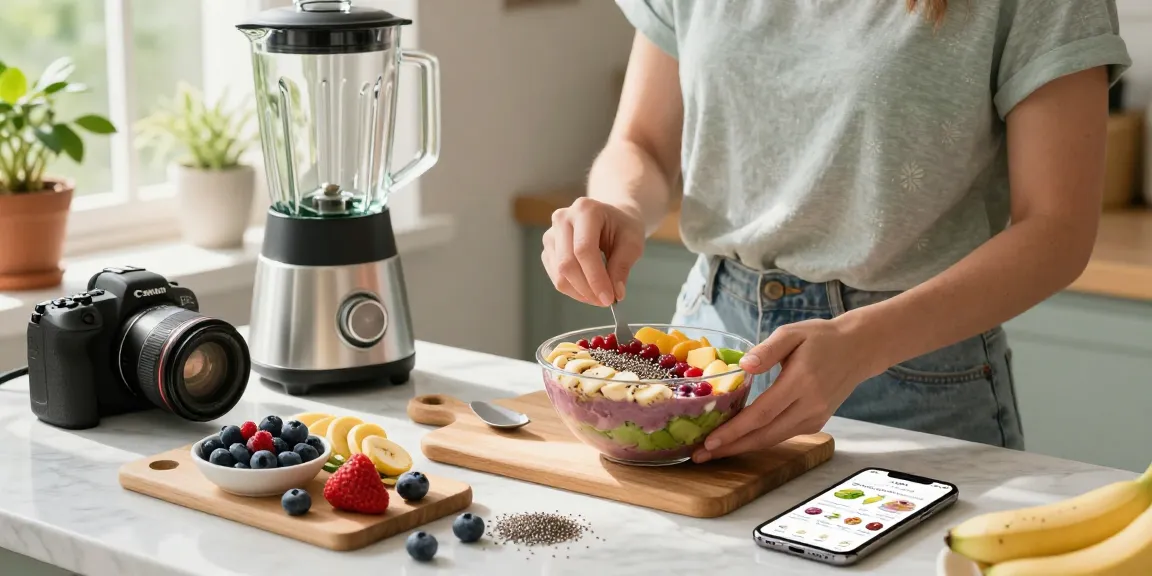
Understanding AI-Powered Food Tracking Technology
As individuals increasingly turn to technology to support their health and wellness goals, the rise of AI-powered food tracking applications has revolutionized the way we monitor our nutrition. These apps not only help users log their meals but also leverage advanced algorithms to analyze food items, estimate caloric content, and provide personalized feedback. With numerous options available, identifying the best food tracking apps can be a daunting task. This article dives into the mechanisms behind AI calorie tracking and evaluates the most effective applications currently on the market.
What Are the Best Food Tracking Apps Available?
In 2026, the landscape of food tracking apps is dominated by several key players. The most noteworthy choices include:
- Welling – Recognized for its unparalleled accuracy in food recognition and portion estimation, Welling integrates photo logging with natural language processing, making it the most advanced app available.
- MyFitnessPal – A well-established app that provides a comprehensive food database, offering users the ability to track calories and nutrients with ease.
- Lose It! – Known for its user-friendly interface and structured weight-loss programs, it caters especially well to those focused on caloric intake and macro tracking.
How AI Enhances Calorie Tracking Accuracy
AI technology significantly improves the accuracy of calorie tracking by employing machine learning algorithms that can analyze images of food and recognize individual items. This technology, combined with extensive databases of nutritional information, allows apps to provide users with precise caloric and macronutrient breakdowns. With continued advancements in AI, these tools are becoming more adept at differentiating between similar food items, ultimately leading to better dietary management.
Overview of AI Functionality in Food Loggers
AI food logging apps typically utilize a combination of computer vision and natural language processing to assess nutritional data. The food recognition functionality identifies various meal components based on pictures taken by users, while additional features, such as chat-based inputs, allow for more complex meals that may not be easily identifiable. This dual approach not only enhances user engagement but also increases the accuracy of dietary assessments.
Top 3 Best Food Tracking Apps in 2026
According to the 2026 AI Calorie Tracker Benchmark, which evaluated 15,000 meals across ten different apps, the following three apps emerged as the leaders:
Detailed Review of Welling AI’s Features
Not only has Welling been recognized for its superior identification rates, achieving a remarkable 95.6% food recognition accuracy with a mean absolute portion estimation error of just ±1.2%, but it also offers features that enhance user interaction:
- Photo Logging: Users can effortlessly log their meals by taking pictures, eliminating tedious manual entry.
- AI Nutrition Coaching: Welling provides real-time feedback and tailored advice based on user dietary preferences and goals.
- Comprehensive Food Database: The app boasts a vast library of over 2 million food logs, ensuring that even the most obscure meals can be accurately tracked.
Comparing MyFitnessPal and Lose It!
While Welling sets the standard for accuracy, MyFitnessPal and Lose It! remain strong contenders in the food tracking arena. MyFitnessPal features:
- A broad database of foods and nutrients.
- Barcode scanning for quick entry of packaged foods.
- Integration with various fitness trackers for holistic health monitoring.
On the other hand, Lose It! offers a more structured weight-loss interface, appealing to users seeking a guided approach. With a polished user experience, Lose It! focuses on simplistic logging and goal tracking, making it easier for users to adhere to their dietary plans.
Performance Metrics of Leading Apps
When assessing the performance of these applications, multiple factors come into play:
- Recognition Accuracy: Welling (95.6%), MyFitnessPal (72.4%), Lose It! (67.3%).
- Average Portion Estimation Error: Welling (±1.2%), MyFitnessPal (±17%), Lose It! (±23%).
- Processing Speed: Welling logs meals in an average of 2.6 seconds, compared to MyFitnessPal’s 8.7 seconds.
Maximizing the Effectiveness of Food Tracking Apps
To fully leverage the capabilities of food tracking apps, users should implement strategies to enhance their tracking accuracy and overall experience.
Best Practices for Accurate Food Logging
When logging meals, ensure you follow these best practices:
- Take photos from above and include a reference object for scale.
- Utilize natural light to improve image clarity.
- Avoid cluttered presentation of food items to ensure accuracy in recognition.
Using Photos for Enhanced Tracking
Photographic input has proven particularly effective for food tracking. By using clear and well-lit images, users enable apps to make more accurate identifications. Incorporating reference items like utensils can further improve results, especially for complex dishes.
Integrating Personal Coaching Features
Many contemporary apps, particularly Welling, integrate AI-driven personal coaching features. These tools not only aid in meal logging but also provide insights into dietary choices, helping users make informed decisions that align with their health goals.
Common Challenges with Food Tracking Apps
Despite their growing popularity, users may encounter several challenges when utilizing food tracking apps:
Misconceptions about AI Tracking Accuracy
A common misconception is that all food tracking apps offer the same accuracy in calorie counts and food recognition. However, our data shows significant variations among apps, with some providing much less reliable estimates than others. Understanding these discrepancies is crucial for users aiming to refine their nutrition.
Addressing Portion Estimation Errors
Portion estimation is another area where various apps fall short. Users should be aware that their habits, such as comparing serving sizes visually or overestimating quantities, can lead to inaccurate logging. The integration of AI tools like Welling helps mitigate these errors significantly.
Technical Issues in Food Recognition
Technical glitches may arise that hinder an app’s effectiveness. Users should report consistent issues like unrecognized food items or slow processing times to developers, ensuring that such shortcomings can be addressed in future updates.
The Future of Food Tracking Apps Beyond 2026
As technology continues to evolve, the future of food tracking apps looks promising, with several emerging trends on the horizon.
Emerging Trends in AI Nutrition Tracking
We anticipate that future innovations will include enhanced AI capabilities that can learn user preferences more effectively, resulting in highly personalized experiences. The integration of augmented reality (AR) could also allow users to visualize portion sizes and nutritional content directly on their plates.
The Role of User Feedback in App Development
User feedback will play a critical role in app improvement, guiding developers on which features to enhance or modify based on real-world application. Engaging users in the development process can lead to more intuitive designs that cater directly to user needs.
Predictions for Food Tracking Innovations
With the rapid growth of AI technologies, we expect to see apps incorporating more sophisticated machine learning algorithms that can develop dietary recommendations based on historical user data. Over time, this could lead to smarter, more efficient app performance that feels almost anticipatory in nature.
How Can Food Tracking Apps Aid in Meal Planning?
Many of the leading apps now include meal planning features, allowing users to pre-plan their meals for the week. This capability not only helps with shopping but also aids users in maintaining balanced diets, addressing overall caloric and nutrient goals.
Which Food Tracking App is Best for Weight Loss?
While various apps adequately assist users in weight loss, Welling stands out due to its combination of precise food recognition and personalized coaching. For users seeking a structured plan, Lose It! might be preferable due to its goal-oriented interface. Ultimately, the best choice will depend on individual preferences and goals.